

How to Choose the Right Web Development Partner for Your Business

Choosing a web development partner is a key decision for any business. The right partner helps you build a website that attracts traffic, generates leads, and supports long-term growth. A poor fit leads to delays, broken functionality, and wasted resources. For businesses in service-based industries—such as HVAC, legal, home improvement, or healthcare—the website is more than a digital brochure. It’s the front line of your sales process. Understand Your Website Goals Before selecting a development partner, define what your website needs to do. Goals may include: Generating leads through forms or phone calls Booking appointments online Ranking higher on Google Explaining services clearly Supporting email or ad campaigns List your must-have features. This could include mobile responsiveness, location pages, secure contact forms, or CRM integrations. Developers work best when the scope is clear. Look for Experience in Your Industry Not all web developers understand the challenges of your field. If you run a service business, choose a team that knows how to structure websites for lead generation. A contractor site, for example, should focus on quote forms, gallery images, and service area maps. A law firm site may need secure intake forms and detailed service pages. A generic approach will not produce results. Ask for examples of work done in your industry. Review the site’s design, load time, call-to-action placement, and SEO structure. Review Their Process A good development partner follows a structured process. This includes: Discovery and planning Design mockups Development and testing Launch and quality check Post-launch support You should know who your point of contact is. The team should walk you through timelines, revisions, and next steps. Avoid developers who work without clear communication or documentation. Prioritize Lead Generation and SEO A website must do more than look clean. It needs to convert visitors into leads. Your partner should understand on-page SEO, conversion-focused design, and performance optimization. Ask these questions: Do they design with SEO in mind? Will they help create or structure content? Are forms and contact points easy to use? Will the site be mobile-first? If they can’t speak to traffic, ranking, and lead generation, they may be more focused on visuals than function. Ensure Mobile and Speed Optimization Over half of users visit your site from a phone. Google also ranks mobile-friendly, fast-loading sites higher. A good developer will: Build mobile-first designs Compress images Minimize scripts and plugins Use caching and clean code Make sure site speed and mobile usability are part of the development checklist. Confirm Ownership and Access Once the project is complete, you should own the site. Confirm the following: Will you have admin access? Will you own the domain and hosting? Is there a license or proprietary code that limits edits? You don’t want to rely on the developer long-term for every minor change. Ask for full handoff and training if needed. Check Ongoing Support and Maintenance Sites need updates. Ask what happens after launch. Some developers offer monthly maintenance packages, while others provide support by request. Ask about: Plugin or theme updates Backups and security Fixing bugs or broken links Adding new pages or features A long-term partner should offer support that matches your internal team’s skills and time. Review Pricing and Timeline Transparency Web development costs vary by scope. Ask for an itemized proposal that explains: Design and development fees Timeline for each phase Extra costs for revisions or added features Maintenance or hosting costs (if included) Avoid vague pricing or unclear timelines. A clear agreement prevents delays or surprise charges. Work With a Partner Who Understands Your Market If you are a service-based business in Austin or surrounding areas, you need a development partner who understands local SEO, lead generation, and digital strategy. EVpro Marketing is a marketing agency in Austin, Texas. The team builds custom websites for service businesses that want real results. EVpro focuses on local search rankings, conversion optimization, and long-term performance. Whether you need a site redesign or a new build from the ground up, EVpro creates websites that support your goals and grow with your business. Visit our website to learn more.
Website Essentials Every Home Service Company Should Include
Home service companies rely on customer trust and strong local visibility. A website serves as the foundation of both. Whether your business offers HVAC, roofing, plumbing, landscaping, or remodeling, your website must support your sales process and make it easy for customers to take action. A well-structured website helps turn visitors into leads. It guides people from discovery to contact. Without essential features, even paid traffic may not convert. Why Home Service Websites Matter Customers looking for home services often need help quickly. They search online for a local solution. If your website does not provide clear information, they move on. That’s why structure, usability, and credibility are key. Home service businesses in Austin and similar cities face strong competition. Ranking well and converting traffic depend on getting the basics right. Essential Website Features for Home Service Companies Fast Load Times and Mobile Optimization People often browse from their phones. If your site loads slowly or is hard to use on mobile, you lose potential leads. A mobile-optimized site with fast load times reduces bounce rates and improves engagement. Google also considers page speed and mobile usability when ranking sites. Clear Contact Information Your phone number, service area, and contact form should be easy to find. Place the phone number in the top right of every page. Use a sticky header if needed. The contact form should appear on every service page and should be short—name, phone number, service needed, and zip code. Local Service Pages Create individual pages for each city or neighborhood you serve. Each page should include a map, location-specific content, and service details. This helps with local SEO and gives customers confidence that you work in their area. For example, an HVAC company in Austin should have separate pages for Round Rock, Cedar Park, and Pflugerville. Detailed Service Pages Each core service should have its own page. If you offer AC repair, plumbing, and electrical work, each service should be explained on its own page with a form or call button. Use headlines, short paragraphs, and bullet points to make it easy to read. Include common customer questions, the types of problems you solve, and what people can expect when they hire you. Trust Signals Use real customer reviews. Display them on the homepage and relevant service pages. Include your licensing, certifications, insurance, and associations. Add a section with badges or logos to show this. If you’ve been featured on local directories or industry platforms, include those too. These elements build trust without needing long explanations. Clear Call to Action Each page should guide the visitor to take one action. Call, book, or fill out a form. Use consistent buttons and clear language. Avoid using “submit.” Use terms like “Request Estimate,” “Schedule Service,” or “Call Now.” Repeat your call to action in multiple places on each page, especially near the top and bottom. Photo Gallery or Portfolio Visual proof of your work matters. Show before-and-after photos. Label each project by service and location. For example, a remodeling company in Austin could label a kitchen job as “South Austin Kitchen Remodel – 2024.” This not only shows quality work but also helps with local keyword rankings. FAQ Section Answer common questions directly. These might include: What areas do you serve? Are estimates free? What are your hours? Do you offer emergency service? FAQs help users and reduce calls for simple questions. They also give you opportunities to include keywords and improve ranking. Live Chat or Text Option People prefer fast communication. If you can, include live chat or a business texting tool. Make sure someone monitors it during business hours. This helps capture leads who may not want to call or fill out a form. Secure Website and Regular Updates Use HTTPS encryption. This keeps visitor data safe and avoids browser warnings. Update plugins, themes, and core software regularly. Broken sites or outdated pages lead to lower rankings and less trust from visitors. Tracking and Analytics You cannot improve what you do not measure. Install tools like Google Analytics and Google Search Console. Track which pages get the most visits, where traffic comes from, and what content converts best. Set up goal tracking for phone clicks, form submissions, and chat engagements. Use this data to refine your site over time. Work With a Partner That Understands Home Services Most templates don’t meet the needs of home service businesses. You need a custom site that reflects your brand, supports your services, and drives calls and leads. EVpro Marketing is a marketing agency based in Austin, Texas. The team specializes in custom websites, SEO, and lead generation for service-based businesses. Whether you run a plumbing company, a roofing crew, or a home improvement firm, EVpro builds websites that work. Visit our website to learn how your site can start generating more leads today.
Custom Web Development That Drives Leads for Service-Based Businesses

Custom web development plays a key role in helping service-based businesses generate quality leads. Unlike generic templates, a custom-built website is tailored to the specific goals of a business. It reflects the brand, supports user experience, and guides visitors toward conversion. Austin-based companies offering services like HVAC, plumbing, legal help, remodeling, or consulting must compete in crowded digital spaces. A custom website provides the structure and functionality required to stand out and drive real business results. Why Custom Web Development Matters for Service-Based Businesses Many service businesses rely on word of mouth, local ads, and directory listings. While these methods work, they do not scale effectively. A website optimized for conversions supports long-term growth. Better Site Structure Supports SEO Search engine visibility is essential for lead generation. A custom-built website allows developers to optimize technical factors like URL structure, page speed, and mobile responsiveness. These factors influence Google’s ranking algorithm. For example, a plumber in Austin may want to target keywords like “emergency plumbing near me” or “leak repair Austin.” A custom site ensures each service page is built with the correct tags, schema, and keyword placement. This approach improves search rankings and leads to more organic traffic. User Experience Improves Conversion Rates Service-based websites must load quickly, offer clear information, and provide easy navigation. Custom development allows for intuitive layouts that align with customer behavior. Features like live chat, quote forms, and online booking systems should not feel tacked on. They need to be integrated into the flow of the site. A seamless user experience keeps visitors on the page longer and increases the chance of them filling out a form or making a call. Tailored Functionality Matches Business Goals Templates often include features that do not align with a specific business. Custom development removes unnecessary elements and includes only what supports conversions. An HVAC company may need a form that qualifies leads by zip code. A legal firm may require HIPAA-compliant contact forms. A remodeling contractor may want before-and-after image galleries. Custom web development delivers these features with flexibility and scalability in mind. Elements That Drive More Leads Through Custom Web Development Building a website is not just about design. It’s about creating a lead-generating tool. The following elements are essential. Conversion-Focused Landing Pages Each service should have its own landing page. These pages need clear headlines, brief descriptions, and strong calls to action. Contact forms, buttons, and phone numbers should appear above the fold and throughout the page. Mobile-First Development Over 60% of local searches happen on mobile devices. A custom site ensures the mobile version of your website is easy to navigate, fast, and aligned with how mobile users behave. Mobile-first design leads to higher engagement and more phone calls. Custom Contact Forms and Booking Tools Service businesses need more than a standard contact form. Forms should collect information relevant to the service, such as appointment date, type of issue, or location. Developers can also integrate third-party booking tools or customer management systems to streamline operations. Local SEO Integration Custom development makes it easy to include local SEO strategies. This includes structured data, city-specific service pages, and map integration. Businesses targeting specific zip codes or neighborhoods benefit from precise location signals built directly into the site. Ongoing Maintenance and Data Tracking A website should not remain static. Analytics tools like Google Analytics and heatmaps should be integrated from the start. This allows businesses to track which pages perform well and where visitors drop off. Custom-built websites allow for easy testing and refinement. Developers can adjust call-to-action placement, page layout, or content based on real-time data. This type of optimization improves lead generation over time. Choosing the Right Web Development Partner Not all web developers understand the needs of service-based businesses. The right partner will offer both custom development and marketing expertise. In Austin, EVpro Marketing offers full-service web development and lead generation for service-based companies. The agency builds custom websites that focus on ranking, performance, and conversion. Each site is designed with the client’s specific services and goals in mind. From HVAC and plumbing to legal and consulting firms, EVpro delivers tailored solutions that produce measurable results. About EVpro Marketing EVpro Marketing is a results-driven marketing agency based in Austin, Texas. The team specializes in custom web development, SEO, paid ads, and conversion strategy for service-based businesses. Visit our website to learn more about building a website that works as hard as you do.
Responsive Design: Why Your Website Must Look Great on All Devices
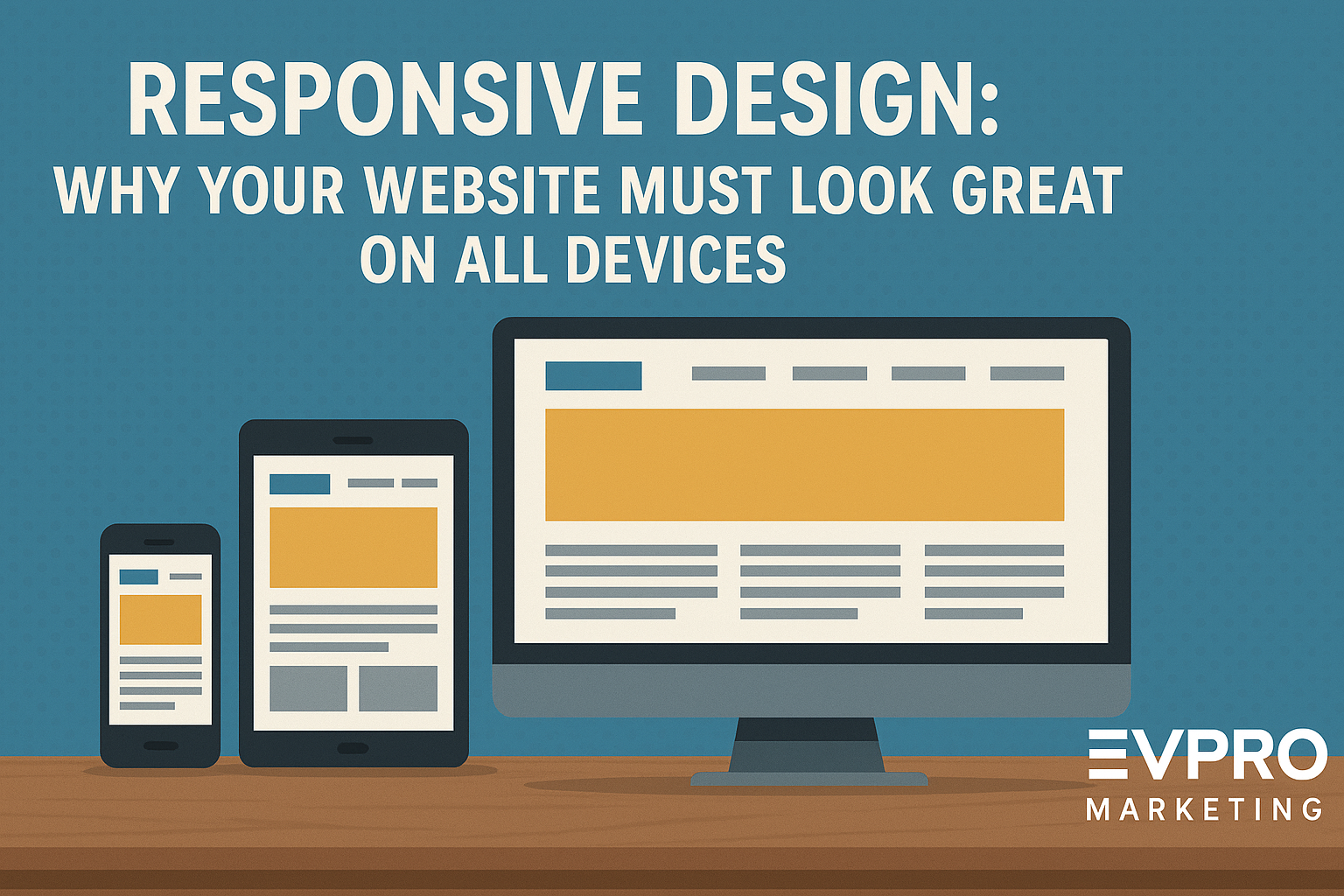
In today’s digital landscape, users access websites from a myriad of devices—smartphones, tablets, laptops, and desktops. Ensuring your website delivers a seamless experience across all these platforms isn’t just a luxury; it’s a necessity. At EVpro Marketing, we emphasize the importance of responsive design to meet the diverse needs of your audience. What Is Responsive Web Design? Responsive web design is an approach where a website’s layout and content adapt fluidly to the screen size and orientation of the device being used. This ensures optimal viewing and interaction experiences, eliminating the need for excessive scrolling, resizing, or panning. Techniques like flexible grids, scalable images, and CSS media queries are employed to achieve this adaptability. Why Responsive Design Matters 1. Enhanced User Experience A responsive website provides a consistent and intuitive experience, regardless of the device. Users can easily navigate, read content, and engage with your site without frustration, leading to increased satisfaction and prolonged visits. 2. Improved SEO Performance Search engines, notably Google, prioritize mobile-friendly websites in their rankings. A responsive design ensures your site meets these criteria, enhancing visibility and driving more organic traffic. 3. Increased Conversion Rates When users have a positive experience on your site, they’re more likely to take desired actions—be it making a purchase, filling out a form, or subscribing to a newsletter. Responsive design reduces barriers to conversion by providing a smooth journey across all devices. 4. Cost and Time Efficiency Maintaining separate websites for desktop and mobile users can be resource-intensive. Responsive design consolidates your efforts, allowing you to manage a single site that caters to all users, saving time and reducing maintenance costs. Implementing Responsive Design: Best Practices Mobile-First Approach: Design for the smallest screen first, then scale up. Flexible Grids and Layouts: Use relative units like percentages instead of fixed pixels. Optimized Images: Ensure images scale appropriately and load efficiently on all devices. Media Queries: Employ CSS media queries to apply different styles based on device characteristics. EVpro Marketing’s Commitment At EVpro Marketing, we specialize in crafting responsive websites that not only look stunning but also perform exceptionally across all devices. Our team ensures that your website adapts seamlessly, providing users with an optimal experience that drives engagement and conversions. Ready to Elevate Your Online Presence? Ensure your website meets the demands of today’s diverse digital audience. Contact EVpro Marketing today to discuss how we can transform your site with responsive design.
Integrating SEO Best Practices into Website Design from the Ground Up
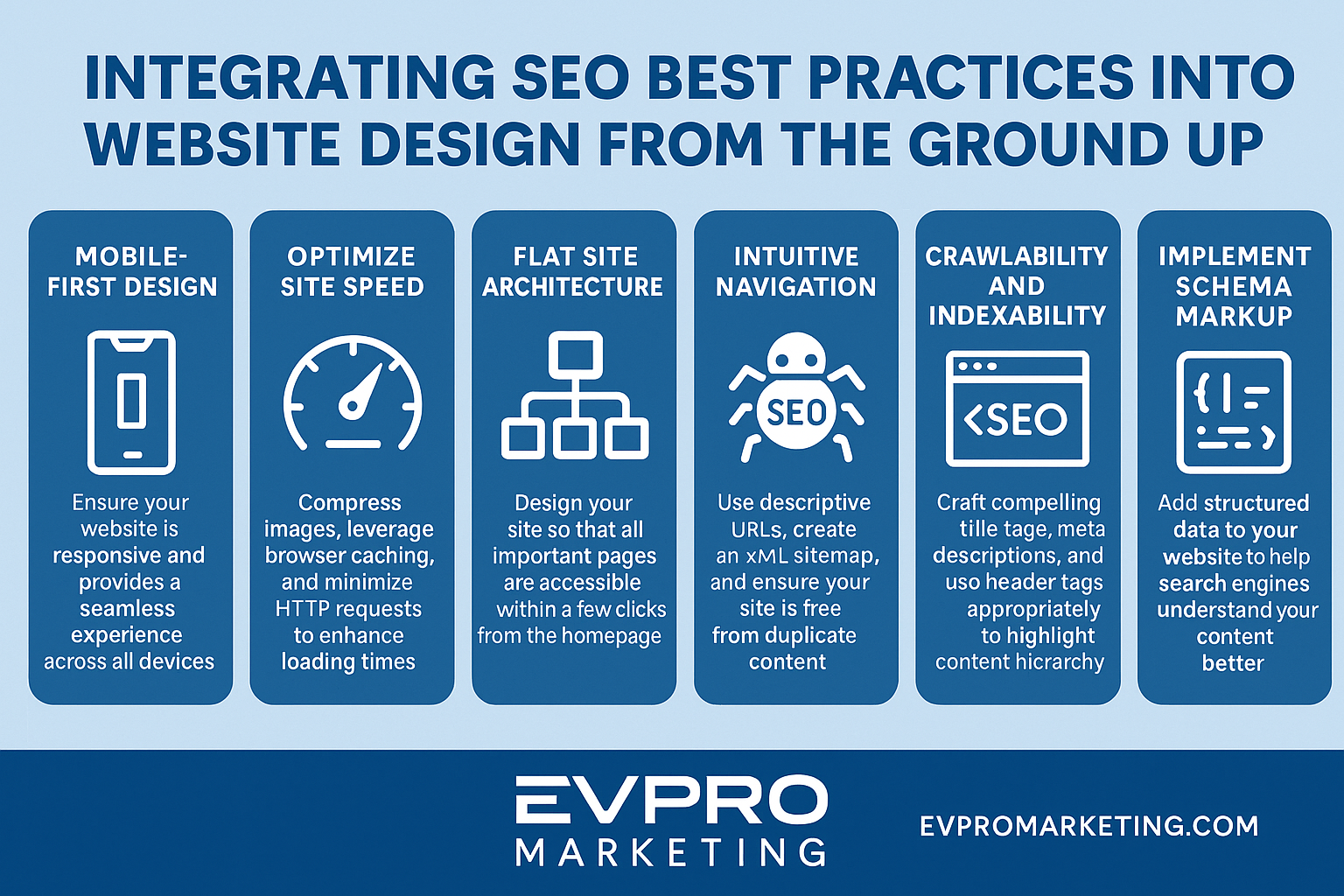
When it comes to building a website that performs, design and SEO can no longer be treated as separate disciplines. If you want your website to drive traffic, generate leads, and support your business growth, SEO needs to be baked into the web design process — not just sprinkled on later. At EVpro Marketing, we specialize in building websites with SEO best practices integrated from day one, ensuring you achieve strong search rankings and an exceptional user experience. Here’s what goes into truly SEO-focused web design: 1. Keyword Research at the Planning Stage Before a single page is designed, it’s crucial to understand what your target audience is searching for. By identifying high-value keywords early, you can: Structure site navigation around important search terms Plan SEO-friendly URL slugs Create content that meets user intent from the start ✅ Pro Tip: Focus on local SEO keywords if you’re a local service business. 2. Site Architecture That Supports SEO A well-organized website is easier for both users and search engines to navigate. We implement: Logical page hierarchies (Home > Services > Service Area Pages) Clean URL structures (e.g., /services/plumbing-austin-tx/) Internal linking strategies to guide both users and Google crawlers ✅ Simple rule: No page should be more than three clicks from the homepage. 3. Mobile-First, Responsive Design Google now uses mobile-first indexing, meaning it primarily evaluates your mobile site to determine rankings. That’s why at EVpro Marketing, every site we design: Looks great and functions flawlessly across all devices Prioritizes load speed and easy tap targets Keeps key content and CTAs accessible on mobile ✅ Fact: 60%+ of searches come from mobile devices. 4. Fast Load Speeds Built In Website speed affects both user experience and SEO rankings. During design and development, we optimize: Image sizes and formats (like WebP) Server response times Code efficiency (minifying CSS, JavaScript, and HTML) Use of CDNs (Content Delivery Networks) when appropriate ✅ Stat: A 1-second delay in page load can reduce conversions by 7%. 5. SEO-Optimized Content Structure We don’t just “write blogs later”—we” plan for content excellence up front: H1-H6 hierarchy for headings Keyword integration without stuffing Meta titles, meta descriptions, and alt tags as standard parts of page templates Schema markup (LocalBusiness, Product, Service) where applicable ✅ Google Tip: Structured content helps crawlers understand your pages better — boosting your chances of rich results. 6. Technical SEO from the Start We address technical SEO issues before launch: Creating a clear XML sitemap Adding Robots.txt files properly Setting up proper 301 redirects Ensuring HTTPS security Preparing SEO-friendly breadcrumb navigation ✅ Bonus: When technical SEO is handled early, there’s less rework later — saving time and money. 7. UX and SEO Working Together User experience (UX) and SEO are tightly linked. We design websites where: Pages load fast Users find what they need quickly Navigation feels intuitive Visual hierarchy directs action (scrolling, clicking, contacting) A great experience keeps people on your site longer — boosting your dwell time, reducing bounce rate, and improving rankings. Why Integrating SEO into Web Design Matters If SEO is an afterthought, you’ll end up fixing costly issues down the line: Rebuilding page structures Redirecting broken links Reworking mobile responsiveness Losing early momentum on search engines At EVpro Marketing, we believe the best SEO starts with smart design. When your site is built right from the beginning, your marketing efforts have a strong foundation to grow upon. Ready to Build a Website That Ranks AND Converts? EVpro Marketing designs websites with SEO success built in — because we know that a good-looking website that no one finds is a waste of your investment. If you’re ready to launch a site that ranks, engages, and drives leads, let’s talk. 📞 Contact EVpro Marketing today to start your SEO-first website project!
The Impact of Website Load Speed on User Experience and SEO
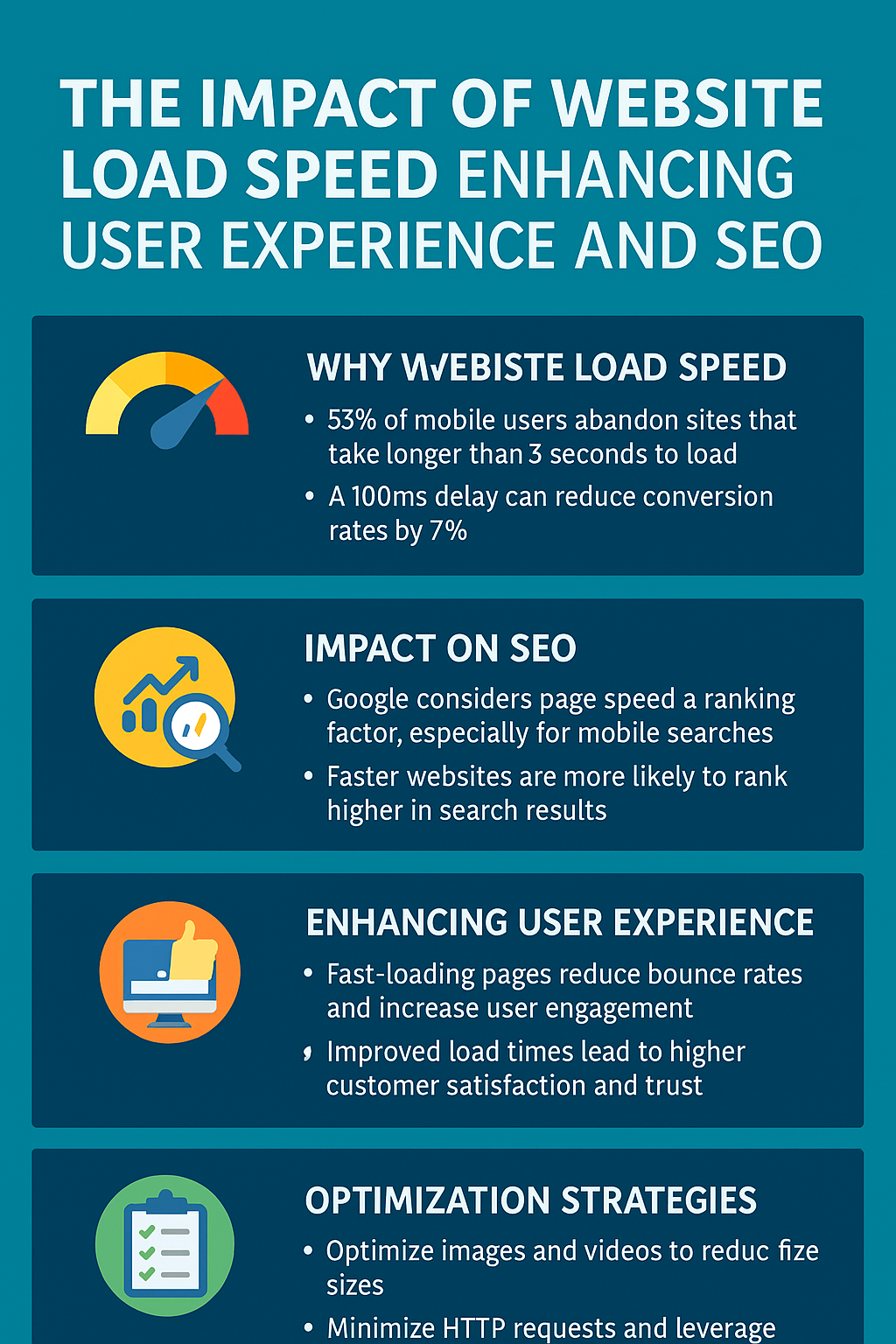
In today’s digital landscape, a website’s loading speed is more than just a technical metric—it’s a critical factor influencing user satisfaction, search engine rankings, and overall business success. For local service businesses, where competition is fierce and user attention spans are short, optimizing website load speed can be the difference between gaining a new customer or losing them to a competitor. Why Website Load Speed Matters 1. User Experience (UX) and Engagement Users expect fast-loading websites. According to Google, 53% of mobile users abandon a site that takes longer than 3 seconds to load. A slow website can lead to higher bounce rates, reduced user engagement, and a negative perception of your brand. 2. Search Engine Optimization (SEO) Website speed is a confirmed ranking factor in Google’s algorithm. Faster-loading websites are more likely to rank higher in search engine results, leading to increased visibility and organic traffic . 3. Conversion Rates and Revenue Speed directly impacts conversions. A study by Akamai found that a 100-millisecond delay in website load time can hurt conversion rates by 7%. For local service businesses, this could mean the difference between a potential customer contacting you or moving on to a competitor. Key Factors Affecting Website Load Speed Image Optimization: Large, uncompressed images can significantly slow down a website. Utilize image compression tools and serve images in next-gen formats like WebP. Browser Caching: Enabling browser caching allows returning visitors to load your website faster by storing certain resources locally. Minification of CSS and JavaScript: Reducing the size of CSS and JavaScript files by removing unnecessary characters can enhance load times. Content Delivery Network (CDN): Implementing a CDN distributes your website’s content across multiple servers globally, ensuring faster load times for users regardless of their location. Tools to Measure and Improve Load Speed Google PageSpeed Insights: Provides insights into your website’s performance and suggestions for improvements. GTmetrix: Offers detailed reports on your website’s speed and actionable recommendations. Pingdom: Allows you to test your website’s speed from different locations worldwide. EVpro Marketing’s Approach to Optimizing Website Speed At EVpro Marketing, we understand the critical role that website speed plays in user experience and SEO. Our comprehensive approach includes: Performance Audits: Conducting thorough assessments to identify and address speed bottlenecks. Technical Optimization: Implementing best practices in coding, image optimization, and server configuration. Continuous Monitoring: Regularly tracking website performance to ensure optimal speed and user experience. Conclusion Website load speed is a pivotal factor that influences user satisfaction, search engine rankings, and conversion rates. For local service businesses aiming to enhance their online presence and attract more customers, optimizing website speed should be a top priority. Ready to accelerate your website’s performance? Contact EVpro Marketing today to learn how we can help you optimize your website for speed, improve user experience, and boost your SEO rankings.
Designing Websites That Convert: Key Elements for Local Service Businesses
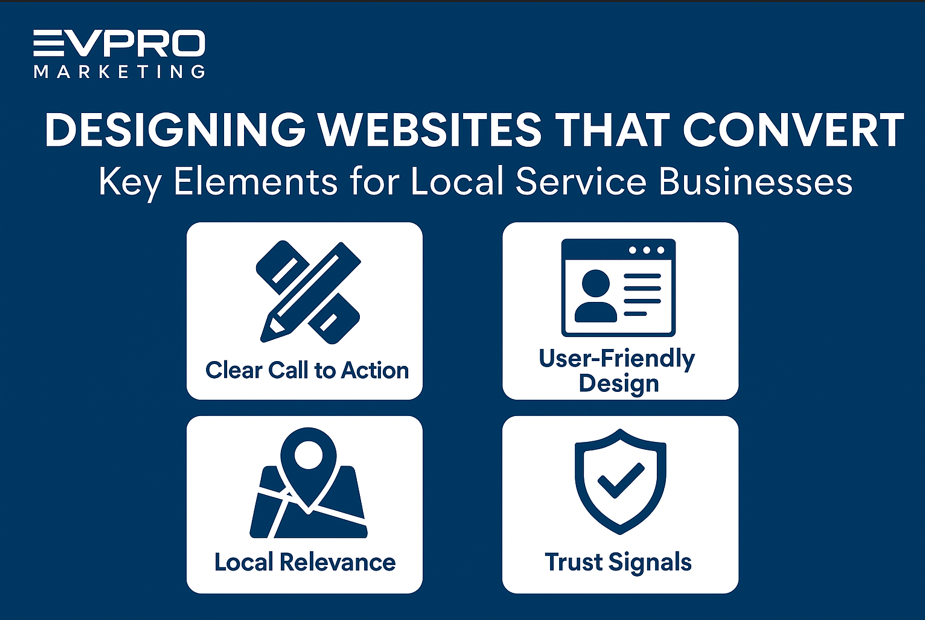
In today’s digital landscape, a website isn’t just a digital brochure—it’s your most powerful sales tool. For local service businesses, a well-designed website can be the difference between a potential customer choosing your services or moving on to a competitor. At EVpro Marketing, we specialize in crafting websites that not only look great but also drive conversions. 1. Clear and Compelling Calls to Action (CTAs) Every page on your website should guide visitors toward a specific action, whether it’s scheduling a consultation, requesting a quote, or making a call. Effective CTAs are prominently placed, use action-oriented language, and stand out visually. For instance, “Get Your Free Estimate Today” is more compelling than a generic “Submit” button. 2. Mobile-Responsive Design With the majority of users accessing websites via mobile devices, ensuring your site is mobile-friendly is non-negotiable. A responsive design adapts seamlessly to various screen sizes, providing an optimal viewing experience and reducing bounce rates. 3. Fast Loading Speeds Website speed directly impacts user experience and search engine rankings. A delay of even a few seconds can lead to increased bounce rates. Optimize images, leverage browser caching, and minimize code to ensure your site loads swiftly. 4. Trust-Building Elements Establishing trust is crucial for converting visitors into customers. Incorporate: Testimonials and Reviews: Showcase positive feedback from satisfied clients. Certifications and Badges: Display any industry certifications or affiliations. Secure Browsing Indicators: Ensure your site uses HTTPS to signal security. 5. Local SEO Optimization Optimize your website to appear in local search results: Google Business Profile Integration: Ensure your business is listed and verified. Local Keywords: Incorporate location-specific keywords throughout your content. NAP Consistency: Maintain consistent Name, Address, and Phone Number information across all platforms. 6. Intuitive Navigation A clear and straightforward navigation structure helps users find information quickly, reducing frustration and encouraging engagement. Use descriptive menu labels and organize content logically. 7. Engaging and Relevant Content Provide valuable content that addresses your audience’s needs. Service Descriptions: Clearly outline what you offer. Blog Posts: Share insights, tips, and industry news to establish authority. FAQs: Address common questions to assist potential customers. 8. Easy Contact Options Make it effortless for visitors to reach out: Contact Forms: Keep them short and straightforward. Clickable Phone Numbers: Especially important for mobile users. Live Chat: Offer real-time assistance to answer queries promptly. 9. Consistent Branding Ensure that your website reflects your brand identity through consistent use of colors, fonts, and imagery. A cohesive look reinforces brand recognition and professionalism. 10. Analytics and Continuous Improvement Implement tools like Google Analytics to monitor user behavior, track conversions, and identify areas for improvement. Regularly update and optimize your site based on data-driven insights. Ready to Transform Your Website? At EVpro Marketing, we understand the unique challenges local service businesses face. Our team is dedicated to designing websites that not only capture attention but also convert visitors into loyal customers. Contact us today to elevate your online presence and drive growth.